VR Headsets: Entry-Level Options Compared
Virtual reality has evolved from a niche technology into a mainstream consumer product, and the market now offers a wide range of headsets at various price points. For beginners, the entry level can be particularly appealing due to lower costs and simpler setups. However, choosing the right headset requires a clear understanding of the trade-offs between resolution, tracking, and available content. This article provides an overview of the key factors to consider when comparing entry-level VR headsets, focusing on information that helps newcomers make an informed decision.
The entry-level VR segment typically includes standalone headsets and PC-connected models that do not require expensive accessories. These devices aim to balance performance and affordability, but each has its strengths and limitations. By examining the specifications and ecosystem of each option, potential buyers can identify which headset aligns best with their priorities, whether that is ease of use, visual fidelity, or access to exclusive titles.
Key Factors in Entry-Level VR
When evaluating VR headsets, several technical aspects influence the user experience. Resolution determines the clarity of the image, while tracking affects the accuracy of movement detection. Additionally, the library of available games and applications is crucial for long-term engagement. Understanding these factors helps beginners assess which device offers the most suitable combination of features within a budget.
Resolution is often the first specification consumers notice. Measured in pixels per eye, higher resolution reduces the screen-door effect and improves text readability. However, resolution alone does not guarantee a good experience; the display type and refresh rate also play significant roles. Entry-level headsets typically offer anywhere from 2560×1440 to 3200×1600 pixels per eye, which is a considerable jump from earlier models. For someone new to VR, a higher resolution can make virtual environments appear more immersive, but it also requires more processing power from the host device.
Tracking systems vary widely among entry-level headsets. Inside-out tracking uses cameras on the headset to monitor the environment and controllers, eliminating the need for external sensors. This approach simplifies setup and is common in standalone devices. On the other hand, outside-in tracking uses base stations to track the headset and controllers with greater precision, but it adds complexity and cost. For beginners, inside-out tracking offers convenience, though it may have limitations in tracking controllers when they are out of view.
The content library is another pivotal factor. A headset with impressive hardware is of little use if it lacks engaging titles. Major platforms like SteamVR and the Oculus Store provide extensive catalogs, but some exclusives are tied to specific brands. Beginners should consider which ecosystem they prefer, as this can influence the cost of software in the long run.
Comparison of Popular Entry-Level Headsets
Several headsets have become popular choices among newcomers due to their balance of price and features. The Meta Quest 2, now often rebranded as Meta Quest 3, offers a standalone design with a built-in app store. Its resolution of 1832×1920 pixels per eye delivers a sharp image, and its inside-out tracking is reliable in most lighting conditions. The Quest series also supports PC VR via Link cable or wireless streaming, expanding its library beyond native titles.
Another option is the PlayStation VR2, designed specifically for the PlayStation 5. It features a resolution of 2000×2040 pixels per eye, which is higher than many competitors, and utilizes inside-out tracking with four cameras on the headset. However, it requires a PS5 console, which adds to the overall cost. Its exclusive games, such as Horizon Call of the Mountain, are a strong draw for console owners.
For PC enthusiasts, the Valve Index remains a reference point, though it is often priced above entry-level. In contrast, the HP Reverb G2, when available, offers a high-resolution display (2160×2160 pixels per eye) and inside-out tracking, but it demands a powerful PC. The HTC Vive Flow is another option, but it is more of a media viewer than a full gaming headset.
The following list summarizes the key characteristics of these headsets:
- Meta Quest 3: standalone, 1832×1920 pixels per eye, inside-out tracking, large app library, supports PC VR.
- PlayStation VR2: requires PS5, 2000×2040 pixels per eye, inside-out tracking, exclusive titles.
- HP Reverb G2: requires powerful PC, 2160×2160 pixels per eye, inside-out tracking, compatible with SteamVR.
- Valve Index: high-end but includes base stations for precise tracking, 1440×1600 pixels per eye, but its price may exceed entry-level.
Evaluating Resolution and Visual Clarity
Resolution contributes to the perceived sharpness of virtual objects. In entry-level headsets, higher pixel density reduces the screen-door effect, where the grid of pixels becomes visible. For beginners, this can be the difference between an immersive experience and a distracting one. However, resolution is not the only determinant of visual quality. The lens design affects field of view and edge-to-edge clarity, and the refresh rate influences motion smoothness.
Most entry-level headsets offer a refresh rate of 90Hz or higher, which is sufficient to reduce motion sickness in most users. A lower refresh rate can cause judder during fast movements. Additionally, the interface between hardware and software, such as the rendering resolution and anti-aliasing, can impact the final image. Therefore, when comparing headsets, one should look beyond raw numbers and consider real-world performance, which may be influenced by the host device.
For instance, a headset with high-resolution panels might require a GPU that can maintain the frame rate. If the computer cannot keep up, the experience may be compromised. Thus, the resolution advertised by manufacturers is often a maximum capability that is not always achievable in every application.
Analyzing Tracking Technologies
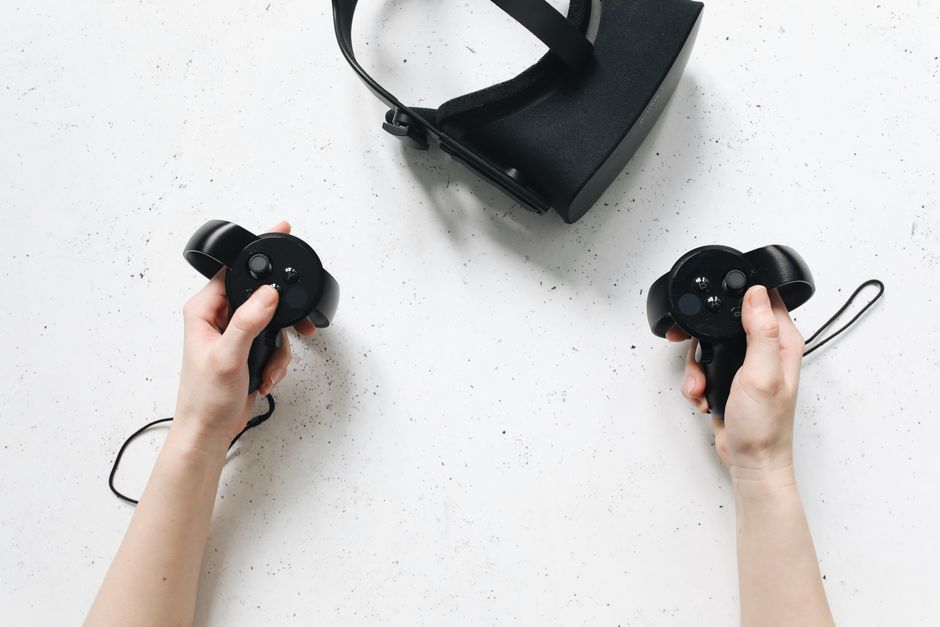
Tracking quality directly affects how naturally users can interact with the virtual world. Inside-out tracking, as seen in the Quest series and PSVR2, uses cameras on the headset to detect the environment and controllers. This method is easy to set up and does not require external sensors, making it convenient for beginners. However, it has blind spots when controllers are behind the headset or very close to the cameras.
Outside-in tracking, used by the Valve Index, relies on base stations to track the headset and controllers with sub-millimeter accuracy. This approach is more robust and allows for complex interactions, but it involves placing the base stations in the room, which adds setup time and cost. For beginners, inside-out tracking is generally recommended due to its simplicity, though it may not be suitable for games that require holding controllers behind the back or near the floor.
Another aspect of tracking is the number of degrees of freedom (DoF). Most modern headsets offer 6DoF, meaning they track both rotation and movement in three-dimensional space. This is essential for room-scale VR. However, some low-end devices might offer 3DoF, which only tracks rotational movement, limiting the sense of presence. Beginners should ensure that any headset they consider has at least 6DoF.
Understanding Content and Ecosystem
The availability of content is a decisive factor in the long-term value of a VR headset. Each platform has its own storefront and exclusive titles. For example, the Meta Quest platform boasts a vast library of games, fitness apps, and social experiences, many of which are exclusive to the platform. On the other hand, PlayStation VR2 leverages the PlayStation ecosystem, offering high-fidelity titles that are not available on PC. PC-based headsets, such as the Reverb G2, can access SteamVR, which has the largest collection of VR games.
Beginners might also consider the depth of the library in terms of genres and quality. While the number of titles is important, the quality and variety matter more. Additionally, some platforms offer cross-buy options, allowing users to purchase a game once and play it on multiple devices, which can be cost-effective.
Choosing an entry-level VR headset involves balancing resolution, tracking, and content library according to personal preferences and intended use cases.
Furthermore, the ecosystem includes not just games but also productivity and social applications. For instance, virtual workspaces and social platforms are expanding, making VR a versatile tool beyond entertainment. Beginners should think about how they plan to use the headset, whether for gaming, fitness, or remote collaboration, and choose accordingly.
Practical Considerations for Beginners
Beyond technical specifications, practical aspects such as comfort, battery life, and software support are important. Headset weight and balance can affect longer sessions, as can the quality of the strap and face cushion. Standalone headsets have integrated batteries, which may limit usage time to around 2-3 hours per charge. PC-connected headsets rely on a continuous power supply, but they require a compatible PC.
Software updates and warranty policies also vary. Some manufacturers provide regular updates that improve tracking or add new features, while others may be slower. Reading user reviews and community feedback can provide insights into real-world experiences. Additionally, the availability of replacement parts and accessories can extend the lifespan of the device.
Budget is another consideration. The initial purchase price is only one part of the cost; users may need to buy games, accessories like protective covers or extra batteries, and possibly upgrade their PC. For those without a gaming PC, a standalone headset like the Quest 3 is a lower-cost entry point, as it does not require a separate computer.
Setting Up Your First VR Headset
The setup process varies by headset. Standalone devices typically require only a smartphone app for account creation and Wi-Fi configuration. PC-connected headsets involve installing software, updating drivers, and ensuring the USB and display connections are correct. For newcomers, a straightforward setup is often preferable. Once set up, users should take time to adjust the interpupillary distance (IPD) and lens-to-eye distance to achieve a clear image and reduce eye strain.
It is also recommended to start with comfortable experiences that do not involve intense movement, gradually increasing complexity. This helps users acclimatize and minimize motion sickness. Many platforms offer tutorial apps that guide users through basic interactions.
Final Thoughts on Choosing an Entry-Level Headset
Selecting an entry-level VR headset is a subjective decision that depends on individual needs and expectations. There is no single best option; rather, each headset excels in certain areas. The Meta Quest 3 offers a versatile standalone experience with a strong library, making it a popular choice for many beginners. The PlayStation VR2 is ideal for those who already own a PS5 and desire high-fidelity exclusive games. PC users with capable systems might find the HP Reverb G2 or Valve Index to be more suitable, provided they are within budget.
Ultimately, potential buyers are encouraged to research current models, read up-to-date reviews, and consider their long-term plans. As technology advances, entry-level headsets will likely continue to improve in resolution, tracking, and content. By staying informed, beginners can make a choice that suits their interests and provides a solid foundation for exploring virtual reality.